From agricultural and energy products to cargo and construction materials, countless essential goods travel through the ports that line the Mississippi River. Despite the massive role maritime shipping and logistics play in our everyday lives, many young people have never even heard of the industry—let alone considered a career in it. That’s where We Work the Waterways comes in, a nonprofit organization teaching the youth about the wide range of career opportunities within the maritime world.
“Naturally, kids grow up hearing about becoming a firefighter, doctor, police officer, teacher, lawyer—but they don’t naturally hear about our industry, because it’s hidden,” says Errin Howard, executive director of We Work the Waterways. “We realized that we need to catch up to other industries that are beating us to the classroom.” Early exposure introduces workforce possibilities beyond typical career paths for high school graduates.
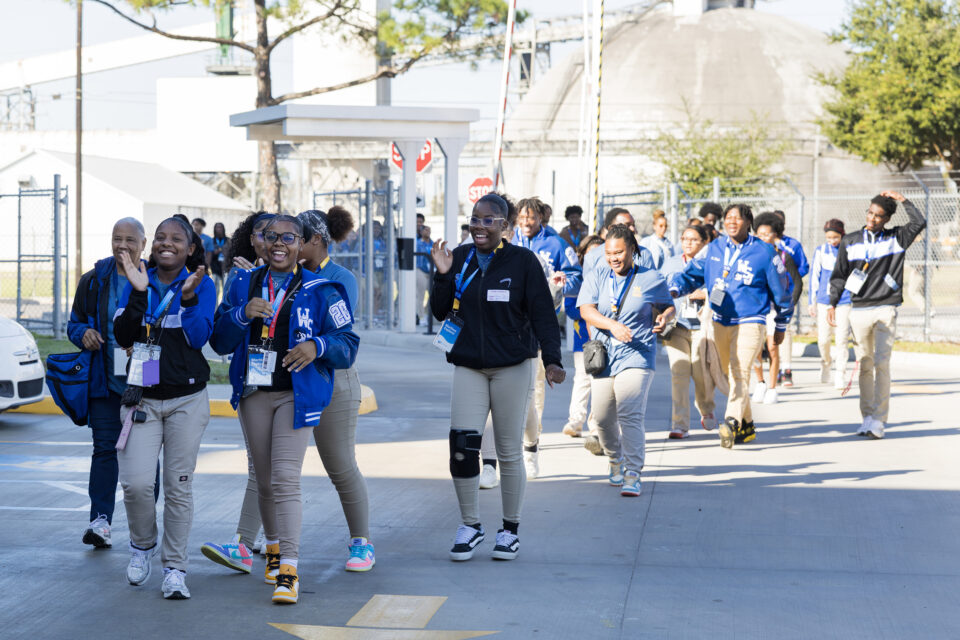
We Work the Waterways presents maritime to students in a way kids can understand. Signature events, known as Maritime Interaction Days, are designed for junior high through high school students. “We work very hard to make sure those are not career fairs—they’re interaction days,” she says. Instead of booths and brochures, students are invited to take part in a day of immersive stations led by maritime professionals across the industry, where engaging, hands-on, and visually stimulating activities replicate real experiences on the job.
“One of our favorite activities is the man overboard station. This involves learning about what happens when someone goes overboard. Students physically point and call out into the water, saying, ‘Man overboard!’, and they get to practice throwing the life ring out,” Howard says.
Soft skill stations like resume building, elevator pitch discussions, presentations led by top leadership, and, more recently, financial literacy talks led by banks, are incorporated into the day. “We talk to students about how much money can be made in maritime, especially as you climb the ladder. It’s an opportunity to teach the kids the power of saving and starting to save early,” she explains.
Their website offers a robust career hub, featuring nearly 100 careers in maritime. “There’s a picture of a person at work, the average salary range, the skills or education needed to obtain that position, a day in the life description, and a link directly to companies that hire for these positions, leading to their job openings page,” Howard says.
The maritime shipping and logistics industry works to support an entire ecosystem of industries. In Louisiana, where the Mississippi river supports one of the largest port systems in the world, building that awareness is critical. For students growing up near these waterways, the industry also offers something else: the opportunity to build a long, rewarding career close to home.
“These professionals come and take time out of their day to really interact with the kids. They’re not just there to be there. They truly enjoy what they’re doing. And I think by showing these young people that people in maritime are willing to take a day out of the office to come and engage with them and be serious and show these students respect as individuals, and that we care about them, it helps showcase how special maritime really is,” Howards says.
By introducing students to maritime careers early and allowing them to interact directly with people who power the industry, organizations like We Work the Waterways are helping ensure that the next generation continues to keep the river moving.
Visit weworkthewaterways.com to learn more about the nonprofit and their initiatives, and discover their outreach work featured on their social media accounts.